
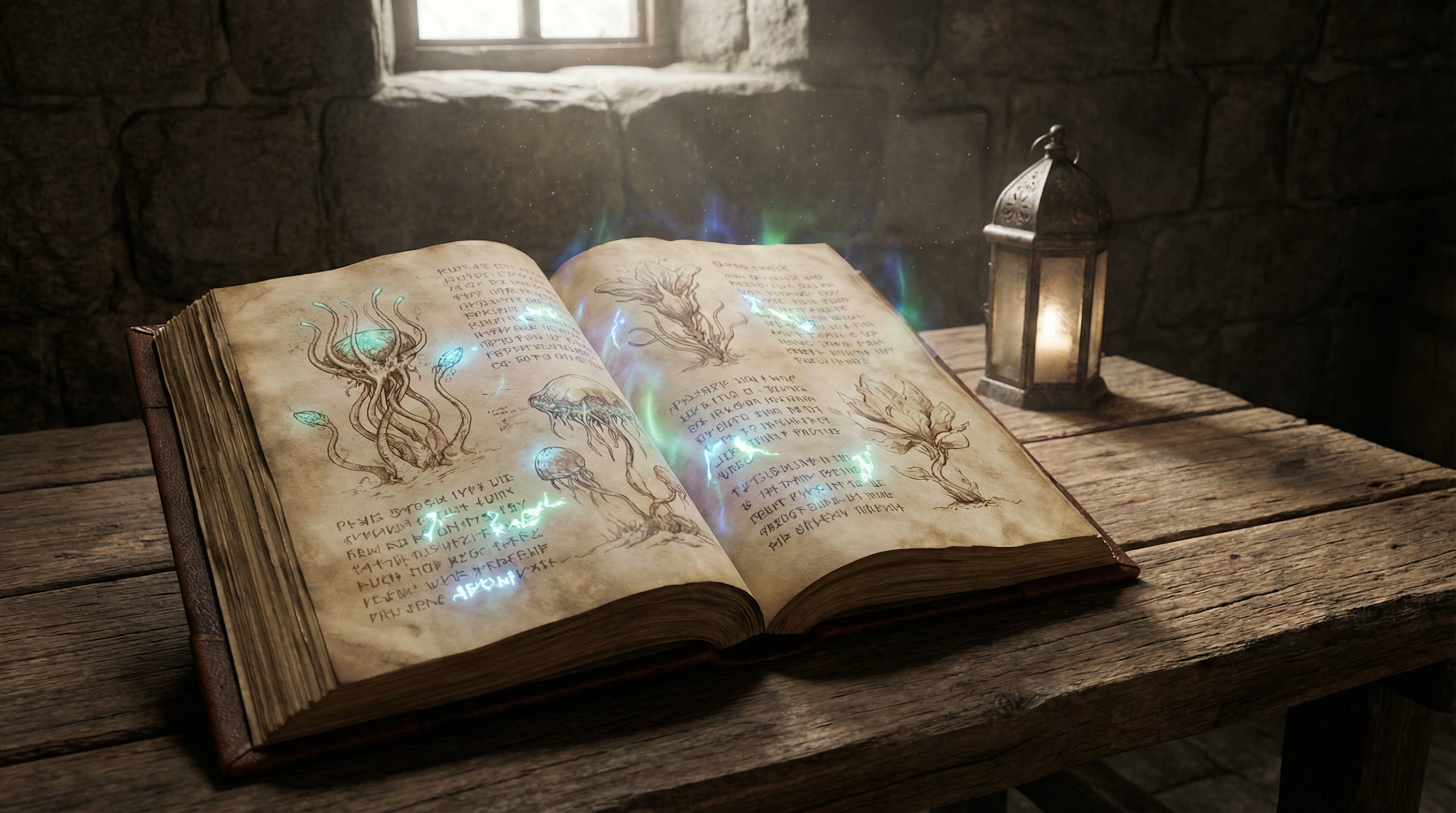
For centuries, cryptographers, linguists, and historians have been baffled by a single, mysterious book: the Voynich Manuscript. Discovered in 1912 by a Polish book dealer named Wilfrid Voynich, this 15th-century codex is written in an entirely unknown language or code that has never been deciphered.
The manuscript is filled with bizarre illustrations of non-existent plants, naked women bathing in strange interconnected pools, and astrological charts that don’t match any known constellations. Despite the best efforts of codebreakers from World War I and II, not a single word has been definitively translated.

Some scholars believe it is a sophisticated medieval hoax, created to swindle wealthy buyers. Others suggest it might be a genuine, lost language or a highly complex cipher protecting alchemical or medical secrets. The sheer consistency of the text, however, suggests it is not random gibberish — it follows patterns consistent with natural human languages.

In recent years, artificial intelligence has been applied to the text, revealing patterns that resemble natural human languages, particularly Hebrew or Arabic. Yet the meaning remains elusive. The Vatican Library, Yale University, and dozens of independent researchers have all tried and failed to crack the code.

The Voynich Manuscript continues to be one of the most tantalizing unsolved mysteries in the world of historical cryptography. It sits today at Yale University’s Beinecke Rare Book Library, still whispering its ancient secrets to anyone willing to listen — if only they could understand.