
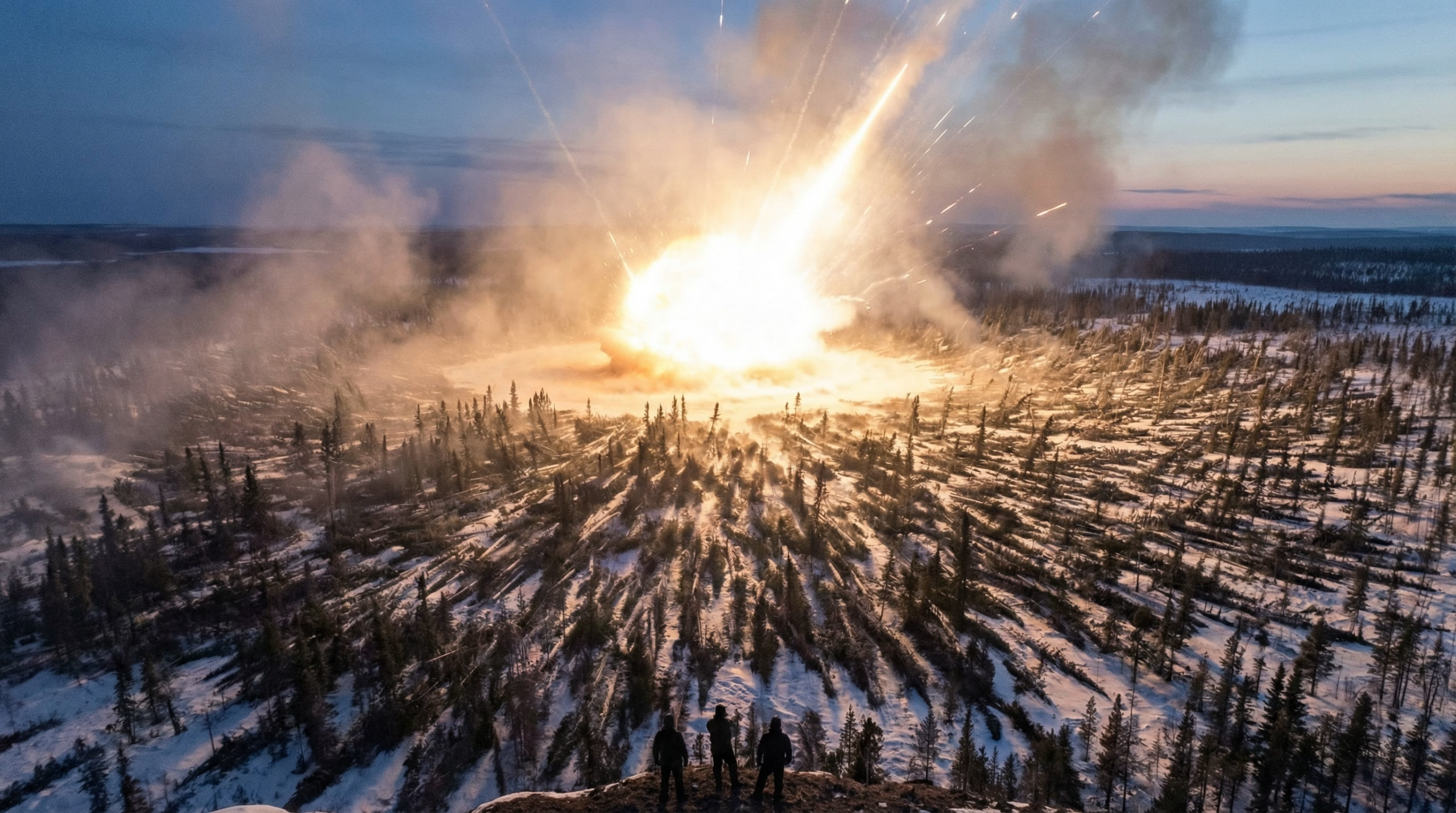
On the morning of June 30, 1908, a massive explosion ripped through the sky over the remote Podkamennaya Tunguska River in Siberia, Russia. The blast flattened an estimated 80 million trees over an area of 830 square miles — an area roughly the size of a major metropolitan region. Yet, strangely, no crater was ever found.
The explosion was so powerful that it was felt hundreds of miles away. Witnesses reported seeing a blinding light and feeling a wave of intense heat. Seismic waves were recorded as far away as the United Kingdom, and the night sky in Europe was illuminated for days due to the dust thrown into the atmosphere.

For decades, the cause of the Tunguska Event remained a mystery. Early expeditions to the site found a landscape of utter devastation, with trees knocked down in a radial pattern pointing away from the epicenter. The lack of a crater led to wild theories, including a crashed alien spaceship, a rogue black hole, or even a natural hydrogen bomb.
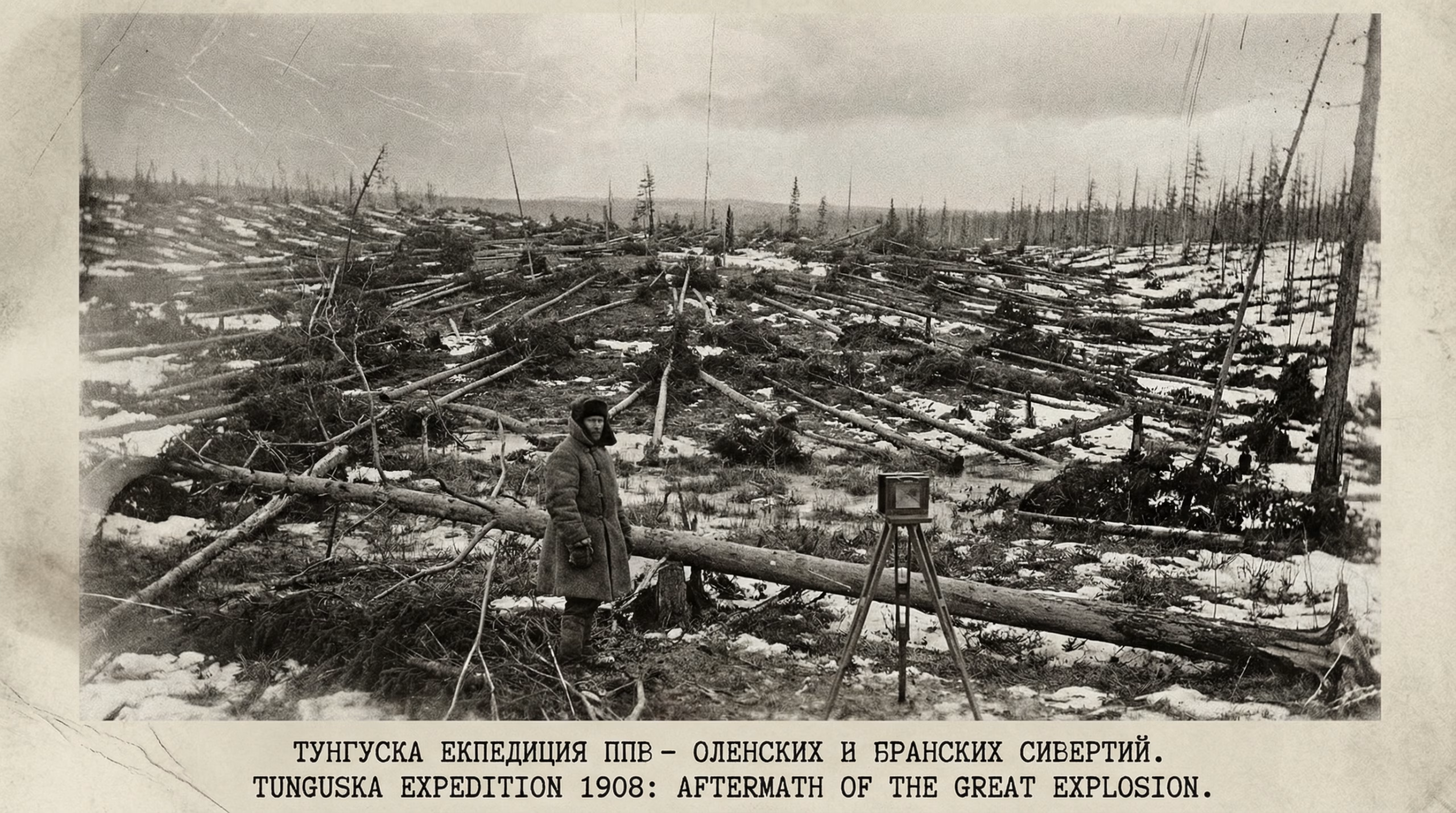
Today, the scientific consensus is that the explosion was caused by a meteor or comet that detonated in the atmosphere, about 3 to 6 miles above the ground. This ‘airburst’ would explain the massive destruction without a corresponding crater. The energy released was estimated to be equivalent to 10-15 megatons of TNT — roughly 1,000 times more powerful than the atomic bomb dropped on Hiroshima.

The Tunguska Event remains the largest impact event on Earth in recorded history. Scientists use it as a benchmark for understanding the potential devastation that even a relatively small space rock can cause. It serves as a sobering reminder of Earth’s vulnerability to cosmic events.