
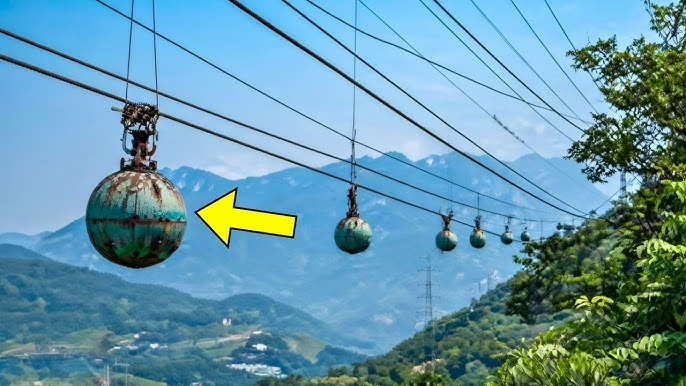
If you’ve ever looked up at power lines, you may have noticed something unusual.
Bright orange or red balls hanging along the cables. From the ground they can look like decorations, almost like large ornaments placed evenly across the wires.
But they are not there for decoration.
These colorful spheres serve an important purpose related to safety, particularly for aircraft that fly at low altitudes.

A Feature That Appears Around the World
These balls can now be seen in many countries. They are commonly installed on power lines that cross rivers, valleys, highways, or areas where aircraft may fly nearby.
Although the exact origin is debated, the practice of installing these markers is believed to have started in the United States during the mid-20th century. Over time, the idea spread and became a common safety measure in aviation and infrastructure planning.
Today, they are a familiar sight on high-voltage lines in many parts of the world.
They Are Much Larger Than They Look
From the ground, the balls might appear to be about the size of a basketball. In reality, they are often much larger.
Some of the larger versions can measure up to 90 centimeters (about 3 feet) in diameter. Their size helps ensure they remain visible from a distance.
Because power lines are suspended high above the ground, objects attached to them can appear smaller than they actually are.
Installing Them Requires Specialized Work
Placing these markers on power lines is not a simple task.
Installation often requires coordination between utility companies, aviation authorities, and specialized technicians. In many cases, helicopters are used to help position and secure the markers safely onto the cables.
Workers on the ground and in the air must carefully coordinate the placement to ensure the markers are positioned correctly.

Why Power Lines Can Be Difficult to See From the Air
Power lines are designed primarily to transport electricity efficiently across long distances. The cables themselves are relatively thin compared to their length.
From the cockpit of an aircraft, especially when flying low, these lines can be difficult to detect against the landscape.
Factors such as lighting conditions, terrain changes, or reflections from water can make them even harder to see.
For helicopter pilots, who frequently fly at lower altitudes than commercial aircraft, this visibility challenge can be particularly important.
A Safety Measure for Pilots
The bright balls act as visual markers, making the power lines easier for pilots to spot from a distance.
They are most commonly installed in locations where aircraft might fly lower than usual, including:
- Near airports
- Over rivers or lakes
- Across valleys or mountain passes
- In remote areas where helicopters operate frequently
By increasing the visibility of the cables, the markers help pilots identify obstacles earlier and adjust their flight path if necessary.
Why the Colors Matter
You may notice that the balls are not always the same color.
Originally, many markers were red. Over time, studies showed that bright orange is often easier to see in a wide range of lighting conditions, which is why orange is now very common.
However, the color sometimes changes depending on the environment. The goal is always the same: choose a color that contrasts clearly with the surrounding landscape.
Because of this, you might see markers in colors such as:
- Orange
- Red
- Yellow
- White
Each color helps ensure the cables remain visible against different backgrounds like forests, mountains, or open sky.
Why They Are Sometimes Placed Close Together
Another detail you might notice is the spacing.
In many areas, these markers are placed roughly 60 meters apart along a cable. This spacing makes it easier for pilots to visually track the entire line.
However, near airports or areas with frequent aircraft movement, the markers may be placed closer together to improve visibility during takeoff or landing.
An Additional Benefit
While these markers are primarily intended for aviation safety, they can also help improve visibility for other situations.
For example, they can make cables easier to see for:
- Boats traveling beneath power lines on rivers
- Maintenance crews working near electrical infrastructure
- Wildlife in some environments
Their bright colors help draw attention to cables that might otherwise blend into the background.

A Simple Idea With an Important Role
At first glance, those colorful balls might seem like a strange addition to power lines.
In reality, they serve a straightforward purpose: helping pilots see power lines clearly from the air.
By making these cables more visible, the markers reduce the chances of accidents and help improve safety in areas where aircraft operate at lower altitudes.
So the next time you spot one of these bright spheres hanging from a wire, you’ll know that it’s not decoration — it’s an important safety feature quietly doing its job high above the ground.