
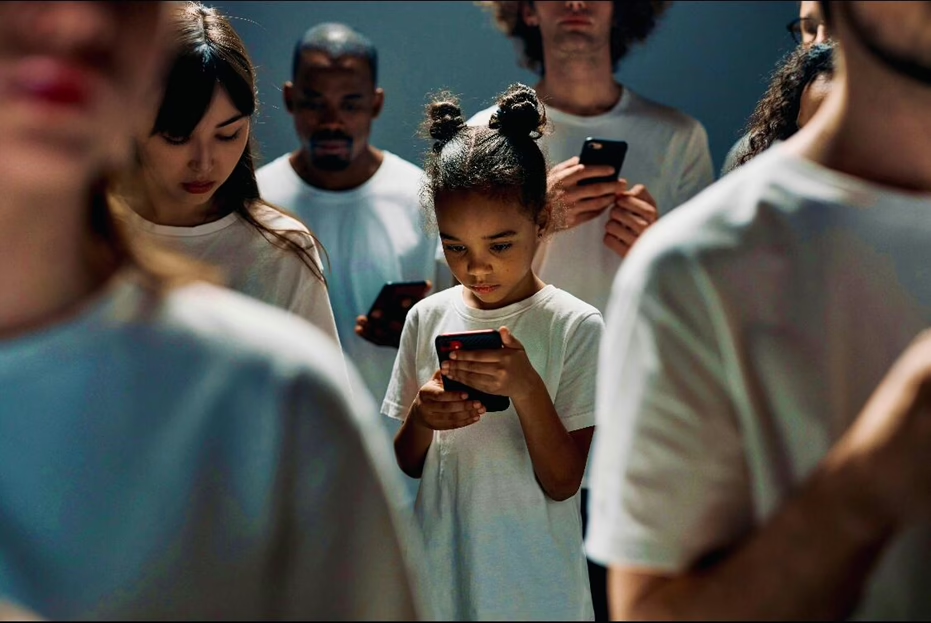
Social media has become an inseparable part of daily life. From checking notifications in the morning to scrolling before bed, platforms designed for connection now shape how we think, feel, and behave. While social media offers entertainment and instant communication, its long-term effects on the brain are subtle—and often unnoticed.
Without realizing it, constant exposure to social media is quietly rewiring your brain in ways that affect attention, emotions, memory, and decision-making.

1. The Dopamine Loop Effect
Social media platforms are built around reward systems. Likes, comments, shares, and notifications trigger dopamine—the brain’s “feel-good” chemical. Each interaction provides a small reward, encouraging you to check your phone repeatedly.
Over time, your brain begins to crave these quick dopamine hits. This rewiring reduces patience for activities that don’t offer instant gratification, such as reading, deep work, or meaningful conversations. The result is increased impulsivity and reduced attention span.
2. Shortened Attention Spans
Endless scrolling trains the brain to process information in rapid bursts. Videos, captions, and images change every few seconds, conditioning the brain to expect constant stimulation.
As a result, focusing on one task for extended periods becomes difficult. Many people struggle to concentrate without checking their phones, even during important tasks. This constant switching weakens the brain’s ability to sustain attention and engage in deep thinking.
3. Increased Anxiety and Stress
Social media creates a constant stream of information, opinions, and comparisons. The brain remains in a state of alertness, processing far more stimuli than it was designed to handle.
Notifications act like mini stress signals, triggering the brain’s fight-or-flight response. Over time, this can lead to chronic stress, restlessness, and anxiety—especially when exposure is excessive or unfiltered.

4. The Comparison Trap
Human brains naturally compare, but social media amplifies this tendency. Users are exposed to curated highlights of others’ lives, often portraying unrealistic success, beauty, and happiness.
Repeated comparison can lower self-esteem and distort self-perception. The brain begins to associate personal worth with online validation, leading to feelings of inadequacy and dissatisfaction—even when real life is going well.
5. Altered Memory and Learning Patterns
Instead of storing information, the brain now relies on external sources. Social media encourages quick consumption rather than deep learning. When information is always one click away, the brain prioritizes where to find knowledge rather than remembering it.
This shift affects memory retention and critical thinking. The habit of skimming content reduces the brain’s ability to process complex ideas or engage in analytical thinking.
6. Emotional Desensitization
Constant exposure to dramatic headlines, viral outrage, and emotionally charged content dulls emotional responses over time. The brain adapts by becoming less sensitive, requiring stronger stimuli to evoke reactions.
This desensitization can reduce empathy and emotional engagement in real-world situations. Everyday experiences may feel less exciting compared to the high-intensity content consumed online.
7. Sleep Disruption and Brain Fatigue
Late-night social media use interferes with the brain’s natural sleep cycle. Blue light suppresses melatonin production, delaying sleep onset and reducing sleep quality.
Inadequate sleep affects memory consolidation, emotional regulation, and cognitive performance. Over time, this creates a cycle of mental fatigue that impacts overall brain health.
8. Reduced Real-World Social Skills
While social media promotes digital interaction, it can reduce face-to-face communication. The brain becomes accustomed to controlled, edited interactions rather than spontaneous, real-time conversations.
This shift can weaken emotional intelligence, social confidence, and nonverbal communication skills—especially among younger users whose brains are still developing.
9. Habit Formation Without Awareness
Perhaps the most powerful effect of social media is how quietly habits form. The brain creates neural pathways based on repetition. Checking your phone automatically—without conscious thought—is a sign of habit-based rewiring.
Over time, this automatic behavior reduces self-control and makes intentional digital usage harder.

How to Protect Your Brain
Awareness is the first step. Limiting screen time, turning off nonessential notifications, practicing digital detox periods, and engaging in offline activities help retrain the brain. Mindful usage allows you to enjoy social media without letting it control your mental health.
Final Thoughts
Social media is not inherently harmful, but unconscious overuse can reshape the brain in ways that affect focus, emotional well-being, and real-world relationships. Understanding how these platforms influence your mind empowers you to regain control.
Your brain is constantly adapting—make sure it’s adapting in a way that supports your well-being, not undermines it.