
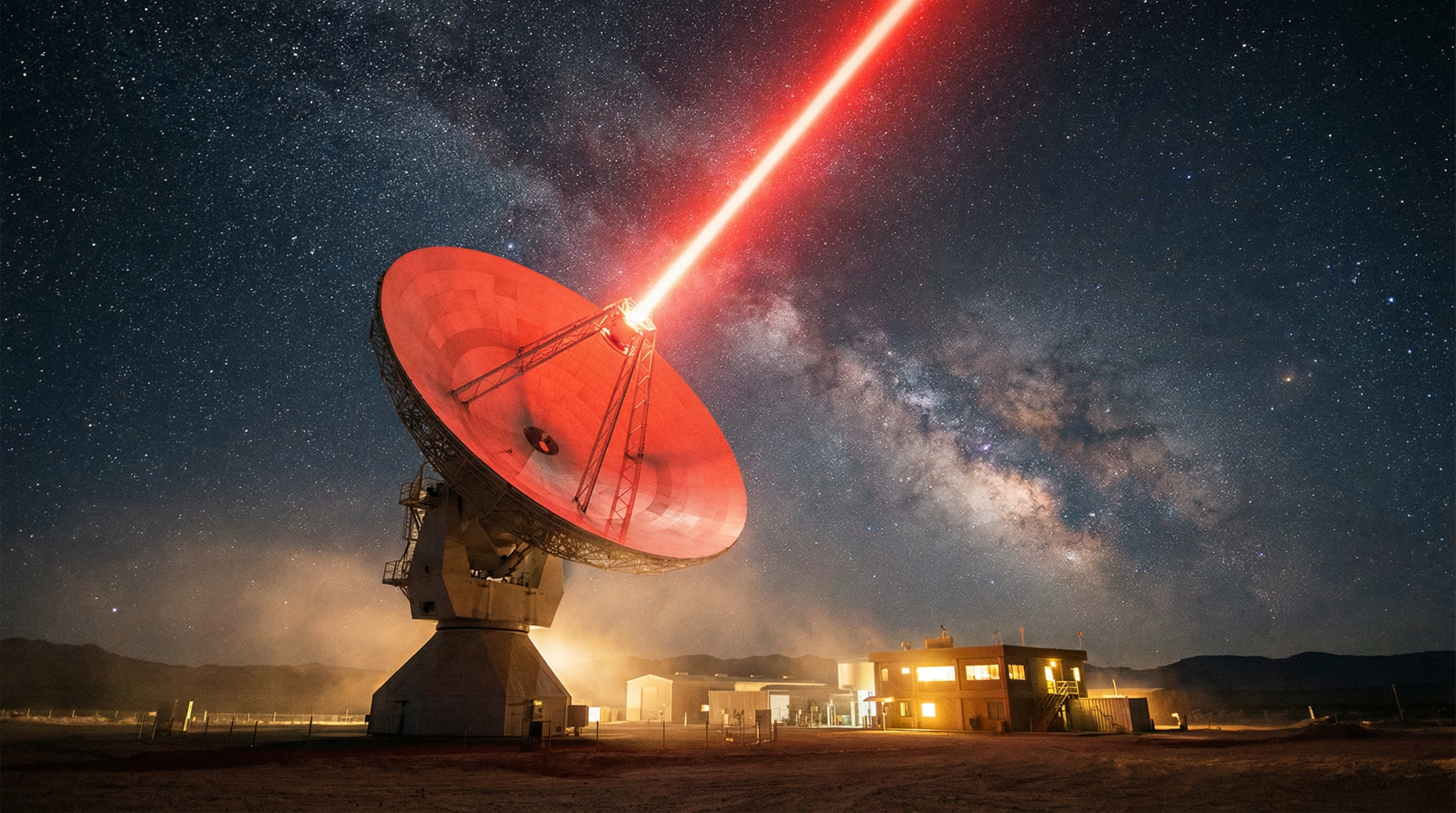
On August 15, 1977, astronomer Jerry Ehman was reviewing data from the Big Ear radio telescope at Ohio State University when he spotted something extraordinary. It was a strong, continuous narrowband radio signal lasting 72 seconds. Ehman was so shocked that he circled the data on the printout and wrote ‘Wow!’ next to it — giving the signal its enduring name.
The Wow! Signal bore all the hallmarks of an extraterrestrial origin. It was transmitted at a frequency of 1420 MHz, a frequency naturally emitted by hydrogen, the most abundant element in the universe. Scientists had long theorized that intelligent aliens might use this frequency to communicate across the cosmos, making it a prime candidate for SETI searches.

Despite extensive efforts to detect the signal again, it has never been heard since. The Big Ear telescope scanned the same area of the sky for years, and more advanced telescopes have also come up empty-handed. The source of the Wow! Signal remains one of the greatest mysteries in the search for extraterrestrial intelligence.

Various natural explanations have been proposed over the years, such as a passing comet or a reflection of an Earth-based signal from space debris. In 2017, a team of astronomers suggested that two comets passing through the region could explain the signal. However, none of these theories fully account for the signal’s unique characteristics and intensity.

For now, the Wow! Signal remains a tantalizing hint that we might not be alone in the universe. It stands as a 72-second mystery that has captivated scientists and the public for nearly five decades, a brief cosmic whisper that may or may not have been meant for us.